Grid Structure Reshapes Spatiotemporal Risk under High Renewable Penetration
Abstract
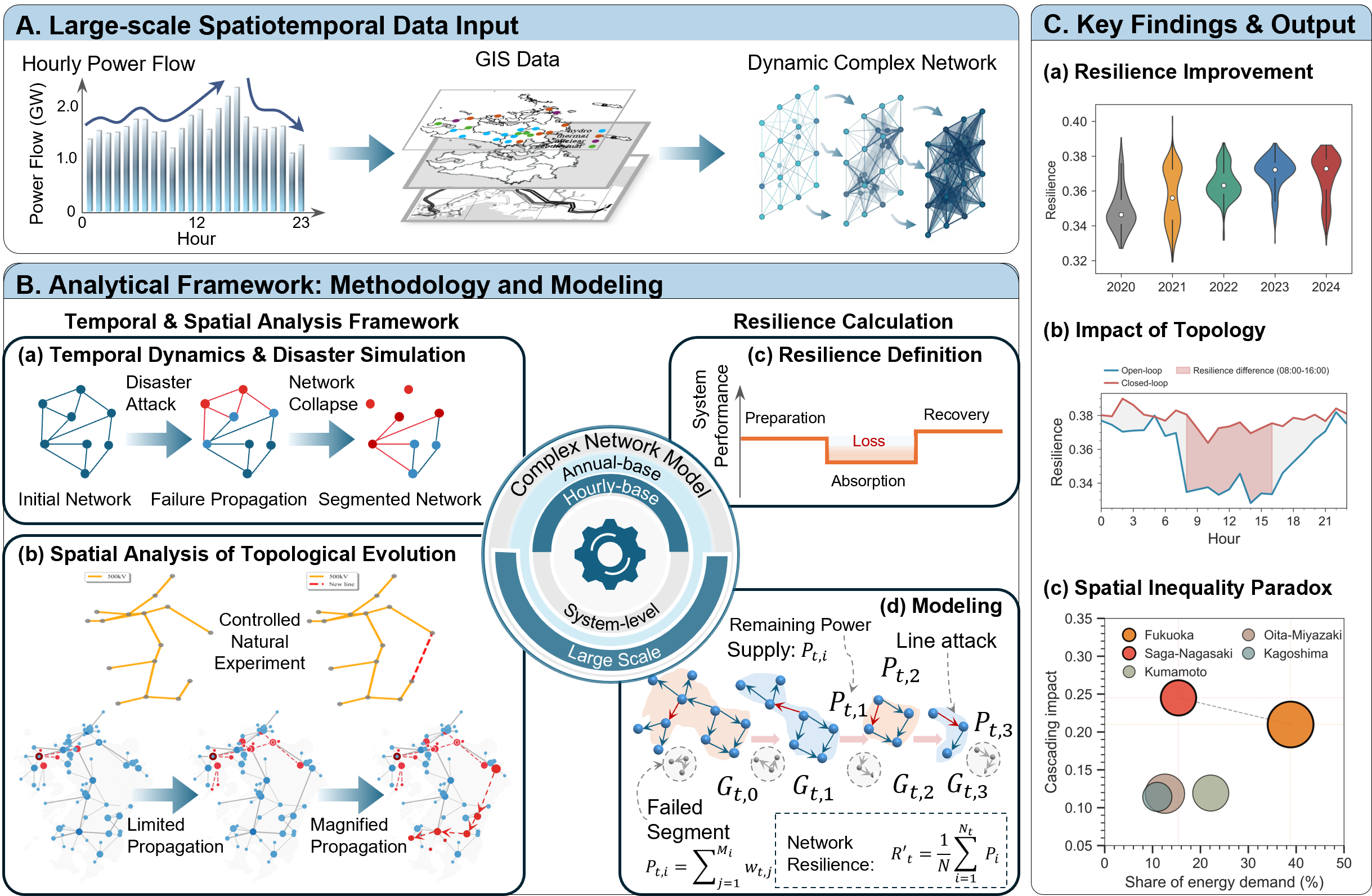
As renewable energy rapidly expands, power grids face hidden vulnerabilities that threaten climate goals and energy reliability, with infrastructure improvements often lagging behind. This study analyzes high-resolution spatiotemporal data from a large-scale public power grid, which has undergone a major structural enhancement while integrating high levels of solar energy. We find that closing power lines into looped configurations improves grid resilience to midday solar generation variability, providing a cost-effective buffer against renewable generation intermittency. However, we reveal an "infrastructure equity paradox" in which the most critical parts of the grid for stability are often not the major urban consumption centers, but rather the systemically important yet locally undervalued nodes that support them. Our findings suggest that a sustainable energy future requires prioritizing structural bottlenecks over simple demand-based planning to ensure that future energy systems are not only low-carbon and efficient, but also structurally robust and socially just.
Research Framework